Sales: 1 844-983-2984
Service: 1 844-983-2984

When it’s time to charge your Electric Vehicle (EV), simply plug in – at home, at work, or at any public charging station. The time it takes to charge your vehicle depends on the kind of EV you have, the size of the battery, and the speed and level of charging point you’re using.
Charging an electric vehicle has never been simpler or more convenient. And not only are there more places to charge an EV than ever before, but there are also more charging options as well.
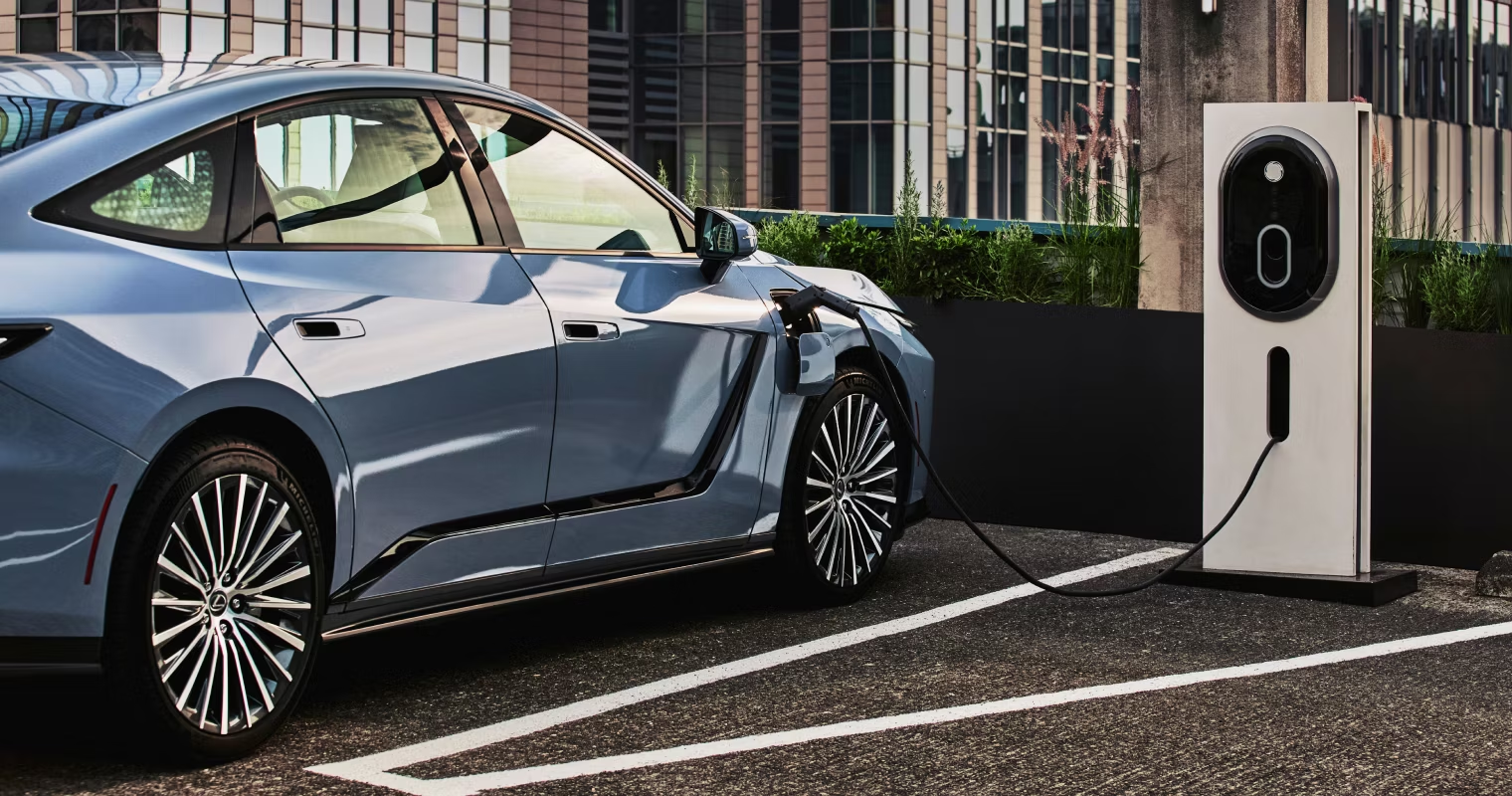
You can charge a Battery Electric Vehicle (BEV) or Plug-in Hybrid Electric Vehicle (PHEV) at home, at work, or at most public charging stations. How long it takes to charge an electric vehicle depends on the size of the battery and the speed or Level of charging point.

Level 1: Standard
120-VOLT OUTLET
At Home Charging
Level 1 charging is the simplest option, and it charges slowly. On the plus side, it uses power from standard wall outlets in homes. All Lexus BEVs from 2026 and beyond include a dual-voltage charging cable to facilitate Level 1 charging.

Level 2: Faster
240-VOLT OUTLET
At Home and Public Charging
Level 2 is like Level 1, but with twice the voltage and increased amperage. This means vehicles charge much faster. At home, this requires installing a Level 2 charger into higher voltage electrical outlets1 – like those that power large appliances like clothes dryers or ovens. In public, Level 2 is widely available at public stations. The dual-voltage cable can also be used for Level 2 charging.

Level 3: Fastest
480-VOLT DCFC
Public Charging
DCFC (Direct Current Fast Charging) provides even higher voltage in the form of DC power. Level 3 requires the use of specialized equipment and manufacturer-specific plugs, which are not available in residential homes. Charging time will vary widely depending on weather conditions and other factors2.
Most EVs use a standard SAE J1772 connector, which combines AC and DC inlets for charging at Level 1 or 2. And 2026 model BEVs will now come with the NACs charging port. With these, drivers can take advantage of all three options for charging at home.
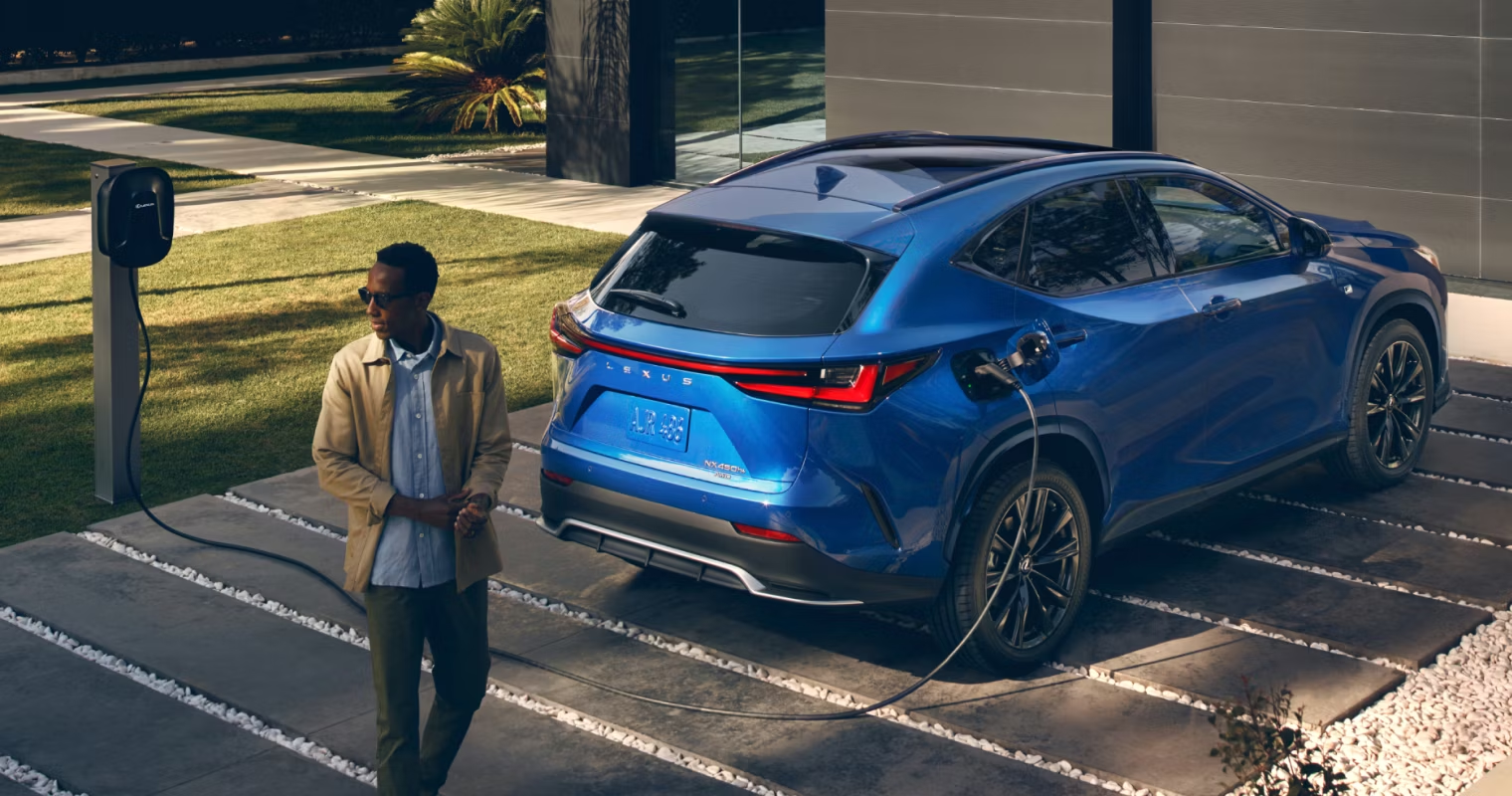

120-VOLT WALL OUTLET
First, you can charge by plugging into a common 120-volt wall outlet for Level 1 charging.

240-VOLT WALL OUTLET
Second, you can plug into a 240-volt wall outlet at home for Level 2 charging.

ELECTRICIAN-INSTALLED HOME CHARGING SYSTEM
Third, you can connect your BEV directly into an electrician-installed home charging system for Level 2 charging.
Lexus’ incorporation of the North American Charging System (NACS) port on certain vehicles offers convenient charging access to over 5000 public charging stations across Canada. And finding a public charger is easy! Simply use the Lexus App (Remote Connect or paid subscription required)4 and in-car navigation to help you find the nearest charger. And should you ever run out of charge, Lexus Roadside Assistance can tow you to the nearest charging station so you can get back on the road.
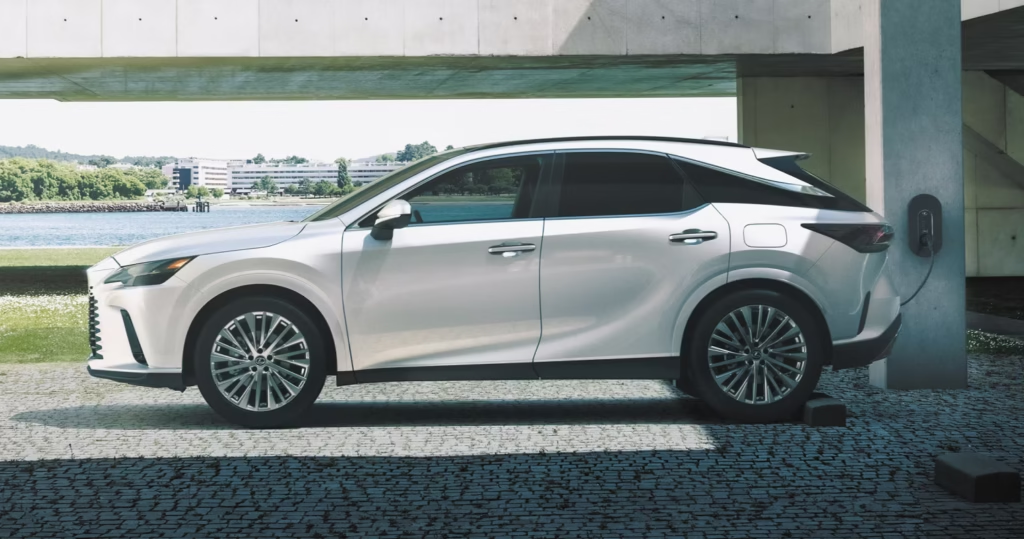
With the NACS Charging Adaptor, Lexus BEV owners now have access to a rapidly expanding NACS DC Fast-Charging network that includes Tesla Supercharger sites, adding many more convenient locations for quick, reliable charging. This expanded access makes planning both daily commutes and road trips easier than ever. (For Lexus battery electric vehicles only. 2025 and earlier BEV models require adaptor for use.)
View Frequently Asked Questions
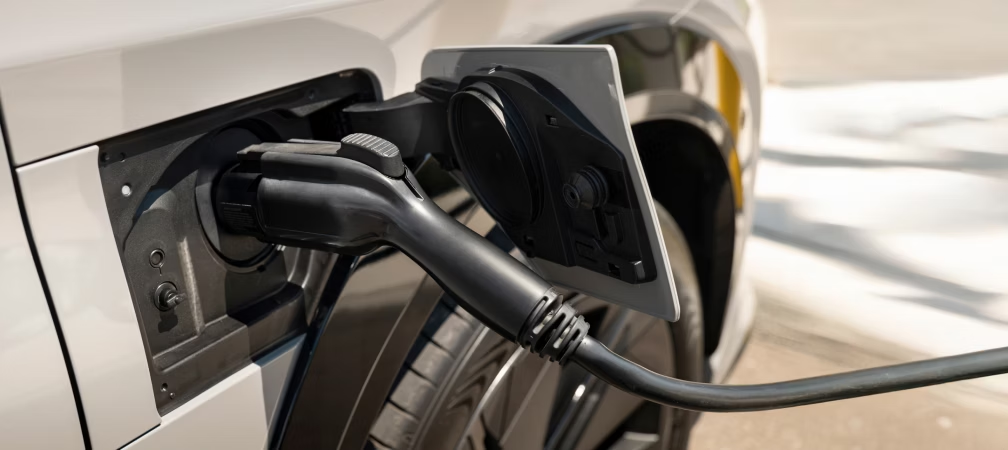
Access the Charging Cable Owner’s Manual to safely set up, operate, and get the most from your vehicle’s charging equipment.
J1772 Dual Voltage
(2023-25 Model Year BEVs and All Model Year PHEVs)
NACS Dual Voltage
(2026 Model Year BEV)
For illustrative purposes only. Connectors not shown to scale.

SAE J1772 Connector
The SAE J1772 connector enables both level 1 and level 2 AC charging. Available on 2023 – 2025 model Lexus BEVs & on PHEVs.

CCS1 Connector
The CCS1 connector enables Level 3 DC fast charging on 2023 – 2025 model Lexus BEVs. This will be replaced by the NACs connector starting with 2026 models.

NACS Connector
The NACS connector enables AC and DC Level 1, 2 and 3 charging.
Download the Lexus Electrified Vehicle Charging Accessories Guide
For optimal longevity, it’s best to charge up to 80%, and keep the battery state of charge in a moderate range between 10% – 80%. When additional range is required, charge up to 100%.
After three 10-80% charge sessions, DC Fast Charging over the next 24 hour period may take longer and be less effective. Starting with 2026 models, this limit increases to five charging sessions per day.
Battery preconditioning lets you bring your BEVs battery to an optimal temperature for DC fast charging in cold weather, improving charging speeds.
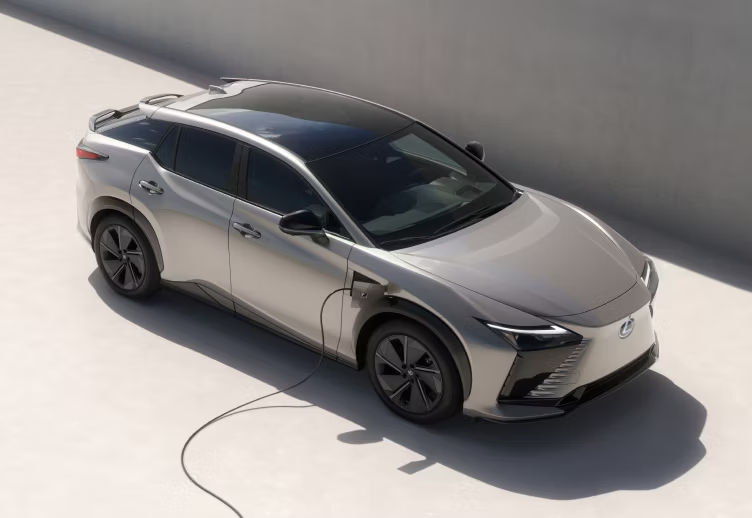
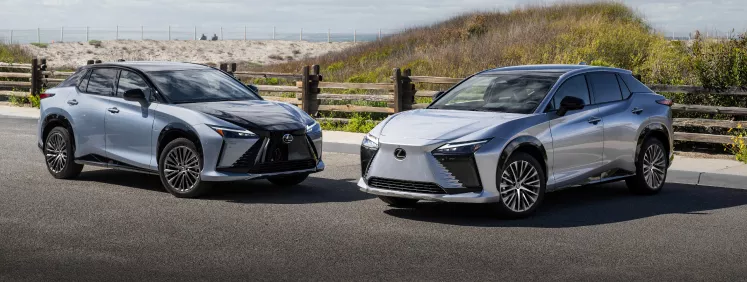
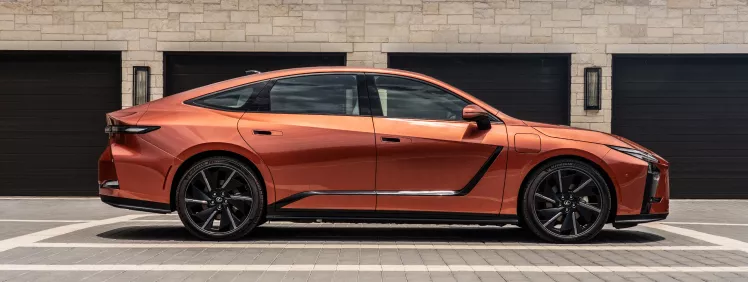
BEVs and PHEVs are growing in popularity, as are the options for vehicles and locations to charge them. Lexus’s adoption of the NACS charger means more charging options than ever for drivers, and those options will continue to grow. In fact, access to NACS supercharger is expected to grow from 5000 locations to over 30,000 by 2030.
1 To reduce risk of fire, injury, or property damage, only (i) purchase/install a safety certified EV charger with voltage/current that is vehicle compatible (ii) use a licensed insured electrical professional to install charger (iii) install and operate in accordance with charger manufacturer’s instructions/warnings and applicable laws.
2 Charge times are estimates only and can vary significantly based on numerous factors including external air temperatures (colder temperatures or extreme heat), charger type/condition, accessory use, and battery level and condition. DC charging times will increase as temperatures decrease, with significant increases possible at temperatures approaching and below freezing. DC Fast Charging for AWD vehicles should be limited to three sessions per day, regardless of external air temperatures. After three AWD 10-80% charge sessions, DC Fast Charging over the next 24 hr period may take longer and be less effective. Public charging experience will vary based on charger type and charger specifications (Level 2 or DC Fast Charger with 150 KW or above) and other factors including vehicle and environmental conditions. Charging times can also vary depending on the actual charging rate realized by the charging station, which can be highly variable and often below the maximum stated rate of charge. Lexus does not own or operate public charging stations and is not responsible for their availability or performance. Always plug-in/charge vehicle in accordance with Owner’s Manual.
4 Use only if aware of circumstances surrounding vehicle and it is legal and safe to do so (e.g., do not remotely start engine if vehicle is in an enclosed space or vehicle is occupied by a child). Remote Connect is dependent upon an operative telematics device, a cellular connection, navigation map data and GPS satellite signal reception, and other factors outside of Lexus’s control, which can limit the ability or functionality of the system. Registration and app download are required. App and services subject to change at any time without notice. See usage precautions and service limitations in Owner’s Manual. To learn about Lexus Connected Services data collection, use, sharing and retention, please visit www.lexus.ca/en/privacy/#connected-services-privacy-notice, The Remote Connect trial period is at no extra cost and begins on the original date of purchase or lease of a new vehicle. After the trial period expires, enrollment in a paid subscription is required to access the service. Terms and conditions apply.
5 Charge times are estimates only and can vary significantly based on numerous factors including external air temperatures (colder temperatures or extreme heat), charger type/condition, accessory use, and battery level and condition. DC charging times will increase as temperatures decrease, with significant increases possible at temperatures approaching and below freezing. DC Fast Charging for AWD vehicles should be limited to three sessions per day, regardless of external air temperatures. After three AWD 10-80% charge sessions, DC Fast Charging over the next 24 hr period may take longer and be less effective. Public charging experience will vary based on charger type and charger specifications (Level 2 or DC Fast Charger with 150 KW or above) and other factors including vehicle and environmental conditions. Charging times can also vary depending on the actual charging rate realized by the charging station, which can be highly variable and often below the maximum stated rate of charge. Lexus does not own or operate public charging stations and is not responsible for their availability or performance. Always plug-in/charge vehicle in accordance with Owner’s Manual.


